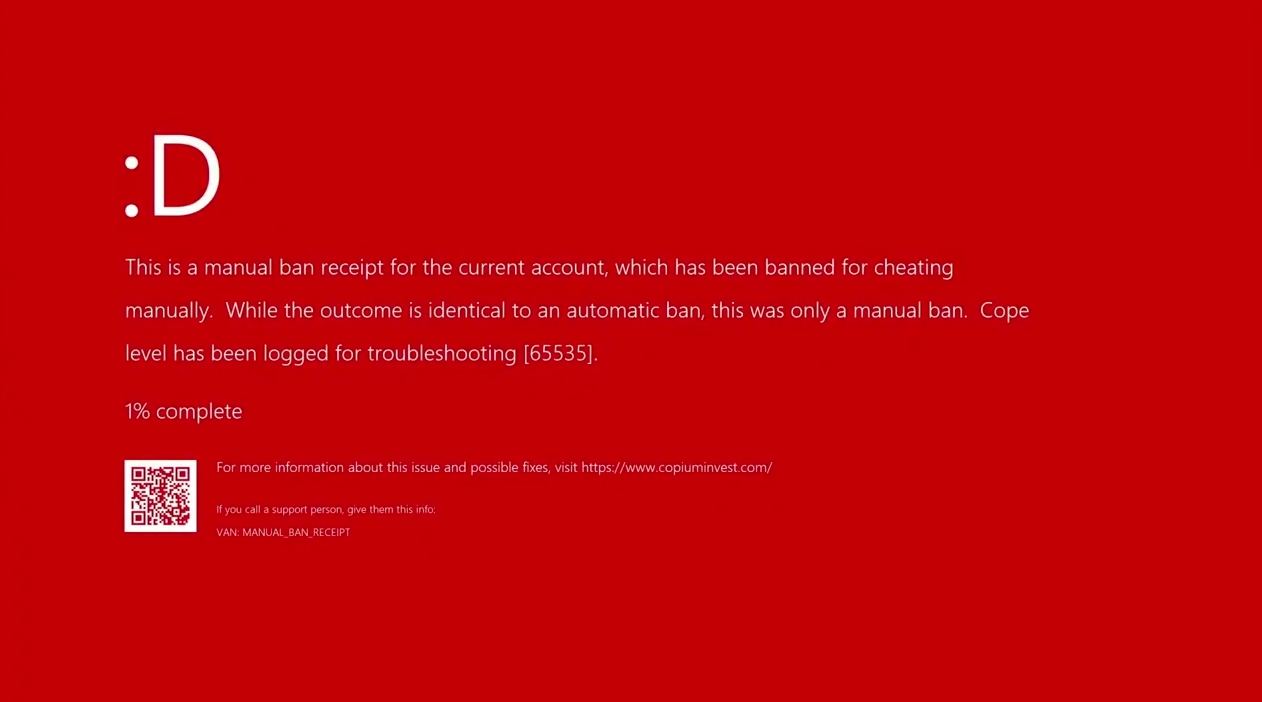
The use of third-party software in Valorant has never been particularly welcomed by developers. The reasons are clear: issues of honesty, the safety of the game balance, and potential security risks. At the same time, for a long time, players who launched such applications not for cheating, but, say, for analyzing their statistics, rarely faced serious sanctions. The anti-cheat was primarily aimed at outright violations — cheats and interference in the mechanics of the game.
However, the situation has changed significantly recently. More and more players are reporting bans for using tracker apps that track personal progress and game performance. Previously, such programs were considered relatively safe and acceptable: they did not provide advantages and did not directly affect gameplay. Now the approach to them has become much tougher.
Increased attention to trackers is associated with a review of possible risks and the desire to maintain a level playing field for all. Even if the player’s goal is simply to analyze their statistics or better understand their own game, the anti—cheat system increasingly regards such applications as a violation of the user agreement. This is part of an overall strategy to combat all forms of unfair play and protect the integrity of Valorant. By blocking accounts using trackers, the developers make it clear that the rules are the same for everyone. Therefore, it is important for players to keep up to date with updates and be careful about any third-party software that interacts with the game in one way or another. Knowing the terms of use and strictly observing them helps to avoid sanctions and maintain a healthy gaming atmosphere.
The impact of tracker apps on Valorant: Recent bans have sparked a wave of discussion
Recently, Sam improvement_26, a user on the X platform (formerly Twitter), shared a curious story. A player approached him, claiming to have been banned from Valorant, and told him under what circumstances this happened. According to him, the reason for the blocking was the use of the tracker application during the game.
It is worth recalling that the Valorant developers have never encouraged third-party programs due to threats to fair play, security and stability of the project. But in the past, punishments for those who did not use cheats were rather an exception. The anti-cheat mostly “hunted” the intruders. This case has become indicative — the control policy has clearly tightened.
The player was banned for several days for an application that was previously considered acceptable and did not affect the mechanics of the game. This immediately raised questions and active discussions in the community. The exact functionality of the tracker was not disclosed, but judging by the comments, it could have been a program displaying nicknames, ranks and other information about players. Such tools are often used to analyze your own statistics, study matches, or evaluate the level of your opponents. Nevertheless, it is important to understand that any third-party software interacting with the game can potentially be considered a violation of the rules.

This ban clearly demonstrates a tougher stance against third—party programs, even those that are not directly related to cheating. It seems that Vanguard, Valorant’s anti-cheat system, has received updates and is now able to identify applications that previously went unnoticed. So far, the story of Sam improvement_26 looks like an isolated incident, but it has already made many players who use similar trackers wary.
At first glance, such sanctions may seem excessive, but they fit into the general line of the developers: to maintain a level playing field and exclude any methods of manipulation. It is also noteworthy that an official list of banned programs has long existed on Valorant’s Chinese servers. This suggests that the trend towards stricter controls is not an accident or a one—time action. It is possible that Riot Games will eventually expand this practice to other regions.
With the changing rules, it is especially important for players to keep an eye on updates, read the user agreement and official announcements. This will help you make informed decisions and not risk your account. It is also worth remembering the associated risks: third-party programs can lead not only to a ban and loss of progress, but also to problems with account security.
Yes, such applications sometimes add convenience or extend functionality. But each player must honestly answer to himself whether these advantages are worth the possible consequences. The gaming industry is constantly evolving, and developers are adapting the rules to maintain an honest and comfortable environment. Valorant’s strict third—party software policy is a reminder of a simple rule: following established rules helps maintain the integrity of the game and makes the experience enjoyable for everyone.