

I have a deep respect for the first two parts of the Gothic series – they left a noticeable mark on my gaming memory, even if I don’t count myself among their fanatical fans. As for the third part, I deliberately avoided it. The reasons varied: from an elementary lack of interest to alarming reviews that I came across on various forums and gaming communities.
However, recently I decided to cast aside my doubts and give the game a chance. Below are my, to put it mildly, emotional thoughts. It turned out to be almost impossible for me to keep a cool head when discussing Gothic 3. This game left a deep mark on me – to deny it would be dishonest even to myself.
Before going into details, I want to immediately outline my mood: I approach the analysis from a rather critical position. No, I do not consider this game a disaster. But to say that I really liked it would mean greatly distorting the truth.
The beginning stands in stark contrast to the first two parts: here, the protagonist is no longer a frail homeless person but a warrior, even if he has lost his former strength, which remains completely unexplained. From the outset, the player either begins or does not begin their war against the orcs. There isn’t a clear objective—just a vague instruction to “find Xardas,” with no guidance on where to search for him.
I genuinely appreciate the central plot concept: the orcs have invaded the land, and each person must choose whether to accept them as rulers or join the rebels to fight back against their tyranny. In this context, the protagonist’s fate genuinely surprised me. Without delving into specifics, I can note that at some point, the player may develop their own ambitions beyond simply serving someone else’s interests and desires. This adds an intriguing layer to the narrative.
The protagonist faces a difficult choice that will shape the future of the nation, yet he seems to have lost his sense of individuality, becoming more generic and less relatable. He seldom speaks more than two sentences on any topic, and his remarks are often bland and unexciting. It’s quite rare to hear him joke or threaten anyone; he mostly asks questions to gather information. While earlier games in the series had similar shortcomings, they were much less noticeable and did not detract from the character’s depth.
The endings are delivered through voiceovers and slides—there are three, each with various versions based on gameplay choices, which theoretically enhances the replay value for players. However, I’m unlikely to play it again anytime soon. Although I commend the main plot for its intriguing elements, it feels too brief compared to previous titles in the series. Most of the time is consumed by side quests, which are abundant and can be overwhelming.
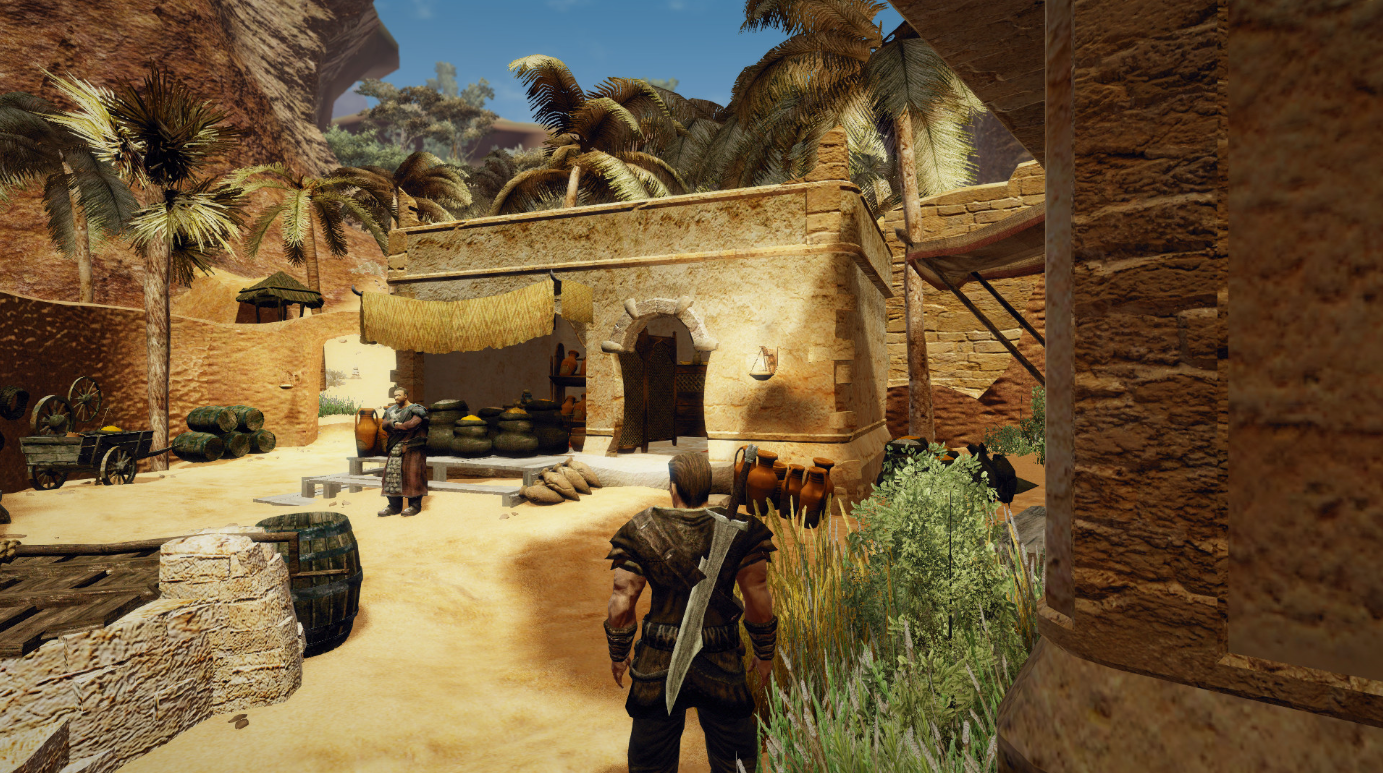
The player rolls their spheres from one abandoned village to another, completing quests, leveling up the character and considering possible alliances with various factions. These settlements are more reminiscent of tiny settlements with a couple of huts than full-fledged cities. Exceptions like Mora Sul, Vengard and partly Montera liven up the picture a little, but even they do not stand up to comparison with the colorful, living Khorinis from the second part or even with the camps from the original game. Personally, I think that this seriously weakens the feeling of scale and presence in the vast world. The first and second parts of the franchise conveyed the feeling of a grandiose world amazingly accurately – despite the limited area of the maps, they were able to create a sense of reality and depth. Picturesque but dangerous landscapes swarmed with creatures – from wild boars to evil trolls. And when I remember this now, writing these lines, I involuntarily feel annoyed. It’s depressing to realize how much the scale has shrunk and faded in this new iteration of the experience.
Table of Contents
Gothic 3 Free Steam Account
It’s time to delve into the details of the combat system. The intertwining of combat mechanics with endless hordes of enemies has created an experience that over time begins to frankly weigh you down. By the thirty-hour mark, exploring the world had lost its former fascination and began to resemble an exhausting routine. For the last ten hours, I basically just walked around enemies, completely ignoring skirmishes. Not because they were too difficult – on the contrary, the very thought of new battles caused fatigue due to their monotony and frequency.
The root of the problem lies in the stamina system. It would seem that its presence should stimulate a thoughtful approach: managing energy, choosing the moment to attack, blocking in time, dodging blows. In fact, it is more often annoying than adding tactical diversity. Instead of deepening the fight, the stamina system becomes another source of fatigue.
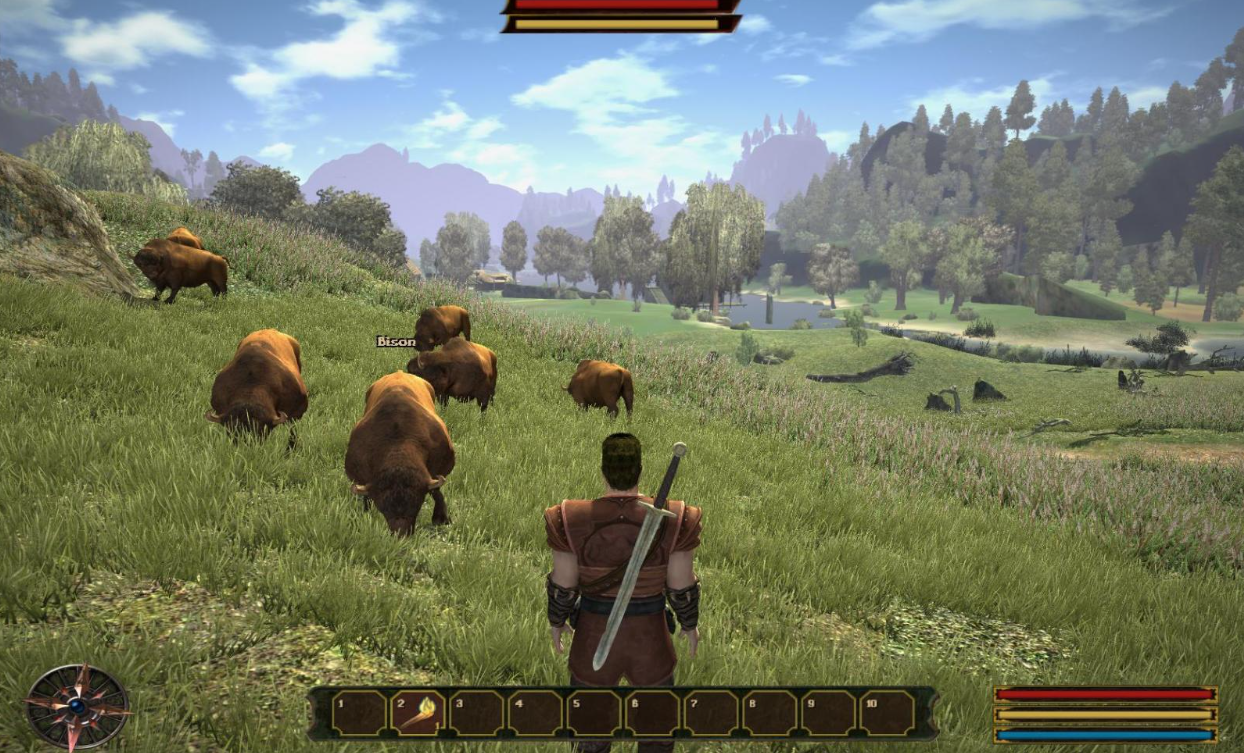
That’s not accurate. I have this feeling that the stamina scale is a feature exclusive to the hero, as every enemy launches attack combinations that drain almost all of your stamina with each attempted block. Often, even the act of blocking fails to hold up against their relentless onslaught. I’ve maxed out my shield skill, yet it barely made a noticeable difference in combat effectiveness. Perhaps dodging could help? Unfortunately, there’s no dodge mechanic (unlike in previous “Gothic” games where rolling back was an option!). You can only step back, which proves to be of little benefit amidst the chaos of battle. To make matters worse, enemy combos can leave the player in a brief stun lock, rendering them vulnerable. And the cherry on top of this flawed combat system is the overwhelming number of enemies that can strike the hero simultaneously, making survival a daunting challenge.
To summarize my experience, after one particularly chaotic fight, I decided to count how many orcs I had defeated. I managed to get up to fifteen before I lost track and gave up, realizing that this was barely half of the actual number I had faced. It truly hit me why the developers opted to make enemy hordes passive, allowing players to engage with only a couple of adversaries at a time. This design choice really impacts the overall enjoyment and strategy of combat, making it feel less dynamic and more frustrating.
The Best Build for Survival in the Chaos of Gothic 3
In many ways, this is reminiscent of the third part of “Gothic”, where battles turn into a chaotic dance around hordes of enemies. I quickly came to the conclusion that the most effective weapon in the arsenal is a two-handed sword – its powerful blows are much more effective than a combination of a shield and a one-handed blade, even with both fully pumped up. In battle, I increasingly find myself in a position where I have to swallow stamina potions one after another, patiently absorbing damage like a sponge. The epiphany came around the fifteenth or twenty hours of the game, when I finally realized how critical it is to invest points in health and stamina. Unlike earlier projects, these parameters do not grow automatically here – they have to be developed manually. This understanding became a turning point: enemies that seemed invincible began to yield without much effort. Nevertheless, even these local successes do not cancel out my early complaints. They only muffle the symptoms without touching the very roots of the problem. The combat system still feels unbalanced and at times downright annoying.
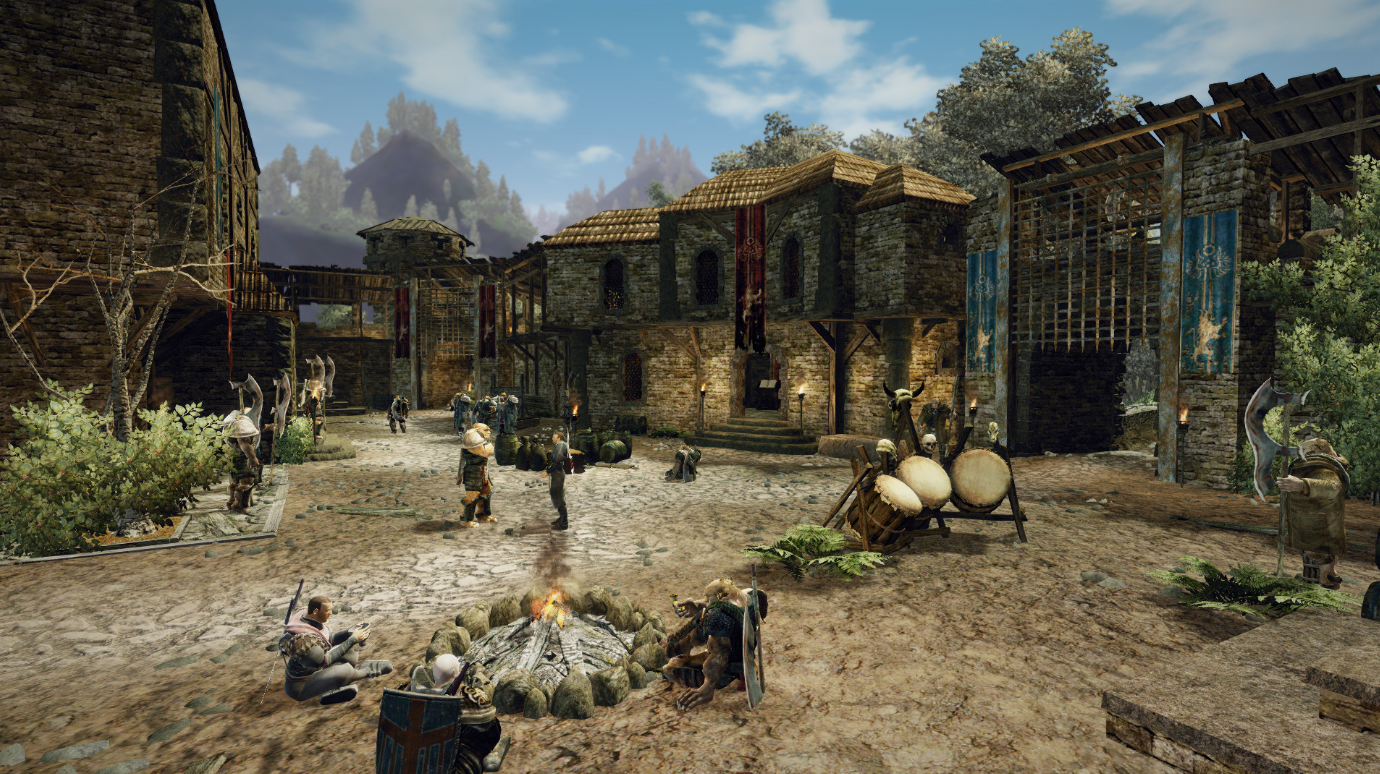
At first I thought the root of all the problems was the disabled “Alternate Balance”. But after activating it, I realized that it does not fix the key flaws of the combat mechanics. The essence remains the same: the combat structure still prevents you from truly enjoying the gameplay.
It’s not a major complaint, but it’s a problem for me
I completely understand why the developers aimed to create an epic sense of battle; they put substantial effort and resources into achieving this. The soundtrack plays a vital role in that experience. However, there’s a tiny issue—so trivial that it could almost be brushed aside. Just kidding, really. The music during arena fights is different. That’s it.
It’s not terrible at all; in fact, it’s genuinely epic and sets the perfect mood for chaos. Yet, after hearing it for sixty hours—battling orcs, golems, and skeletons, roaming deserts, dark caves, lush forests, ancient temples, bustling cities, and even soaring in the sky—it becomes hard to appreciate. Who thought it was a brilliant idea to use just one battle theme for a game that spans fifty hours or more? It feels like a missed opportunity to create a more diverse and immersive auditory experience.
Companion system. In previous parts, this mechanic showed itself from the best side: partners not only had enviable survivability, but also became a real support in critical moments, helping to gain valuable experience points after defeating opponents. What happened to this system in the third part? Where did its thoughtfulness and effectiveness go?
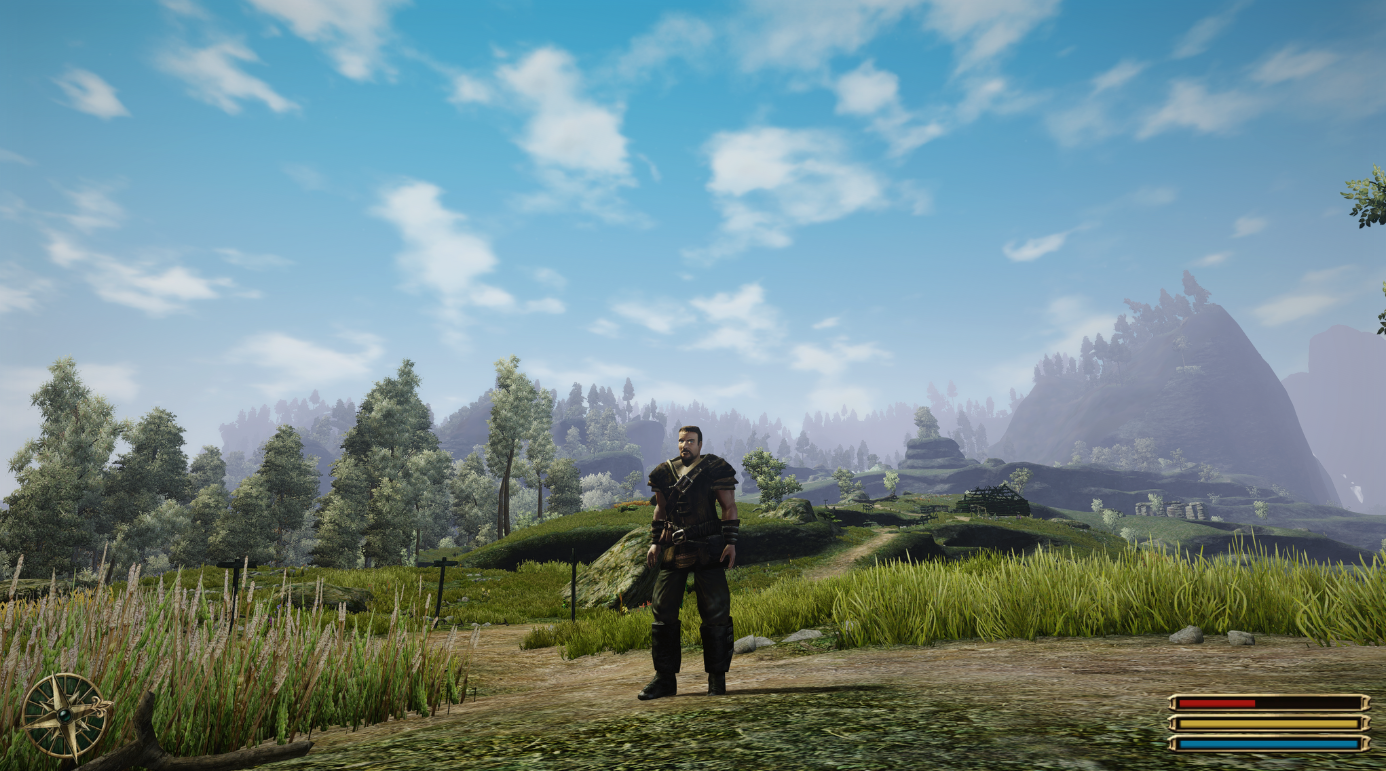
Combat claims deserve a separate analysis: even a warrior seasoned in battles can be paralyzed by a wolf, caught in a chain of stuns – and that’s it, he is helpless, like a puppy in the rain. And now imagine a meeting with orcs! This is not a fight, but a sentence. Especially if you are alone. However, it is worth being honest – sometimes the game is generous with pleasant exceptions. For example, during the liberation of Trellis, I was lucky with two companions who really managed to lay down a couple of orcs on their own. True, at the same time they brought my nervous system to the limit, carelessly exposing themselves to blows and preventing me from getting my bearings in the chaos of battle.
Teammates can perish, and to avoid this unfortunate fate, the game provides “Healing Others” scrolls. Each scroll consumes 60 mana from an initial total of 100, fully restores health, and is worth the investment—everyone deserves one to leave no one feeling upset or neglected. Yet, I often feel slighted: casting the scroll takes an eternity, and during intense battles, at least one enemy always manages to interrupt me, causing the spell to fail and wasting precious mana. It’s incredibly tricky to heal teammates successfully under these circumstances, making it far simpler just to put them to sleep and manage everything myself. I tried that strategy once, and it truly makes the entire task much easier and more manageable.
Broken combat and a little magic turn chaos into tactics
You might argue it’s my own doing: I throw myself into the horde and endure the consequences. Certainly, the choice to engage in fierce battles against overwhelming foes while attempting to capture cities was mine. I could mention that I successfully took a city twice in Mirtana during the questline, aside from the initial settlement. However, it’s worth noting that the game soft-locked many other quests, forcing me to tackle everything alone and without support.
Still, hordes of enemies are a constant presence, both in the unfolding narrative and during my travels across the vast world. This brings me back to the ongoing issues with the combat system, which can feel unbalanced and frustrating.
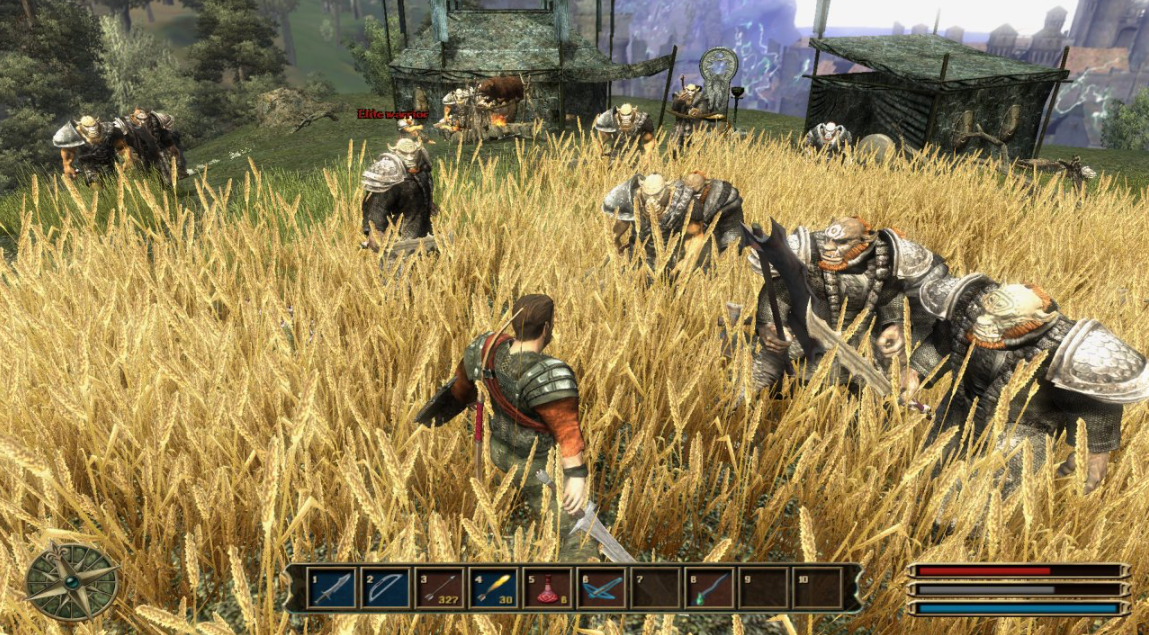
In the first two installments, it was possible to round up a large group of enemies, creating dynamic encounters. The key term here is “round up”: throughout the storyline, you’re either not faced with a horde or it’s the endgame—a final test for the player (and even then, there weren’t too many foes). Alternatively, the player actively gathers a crowd, such as guards, to bolster their ranks, adding a layer of strategy that feels rewarding.
I haven’t explored the combat mechanics for any of the three mage types—druid, archer, and maybe (perhaps I’m still a bit too optimistic about this aspect of the game) they each have their own unique playstyle. I’m just sharing my perspective, and mine has truly been quite an adventure.
Let me highlight something positive. There are endless tactics for dealing with hordes of enemies, ranging from clever exploitation of game mechanics to simple yet effective ingenuity. The powerful “Lightning Call” spell, although it targets just one foe, can be unleashed against a crowd if you manage to gather them together. Playing as a mage must be incredibly enjoyable and dynamic. A well-chosen tactical position allows you to rain arrows down from a crossbow or bow, but it also tends to attract all nearby enemies, which I still find quite puzzling. I’ve frequently taken down ogres this way, and while it’s effective, it does lead to some chaotic moments.
Reputation and render distance are killing the plot of Gothic 3
Okay, the combat isn’t great, but what about the quests and the story? I’ll repeat myself for emphasis. When you focus on the main storyline, it’s quite brief, even though it has a solid premise. Most of the gameplay time is consumed by city and faction reputation mechanics, along with the missions tied to them.
As players boost their faction reputation, they unlock opportunities to purchase powerful armor, and in some cases, they even get to meet the faction leader personally. Similarly, city reputation works but is linked to the ruler of the settlement. Gaining respect is achieved through completing various quests. This highlights the challenge of navigating a vast open world: while excellent quests are a rare find, decent ones pop up occasionally. Unfortunately, the majority of quests tend to be forgettable and lack depth, leaving players wanting more engaging experiences.
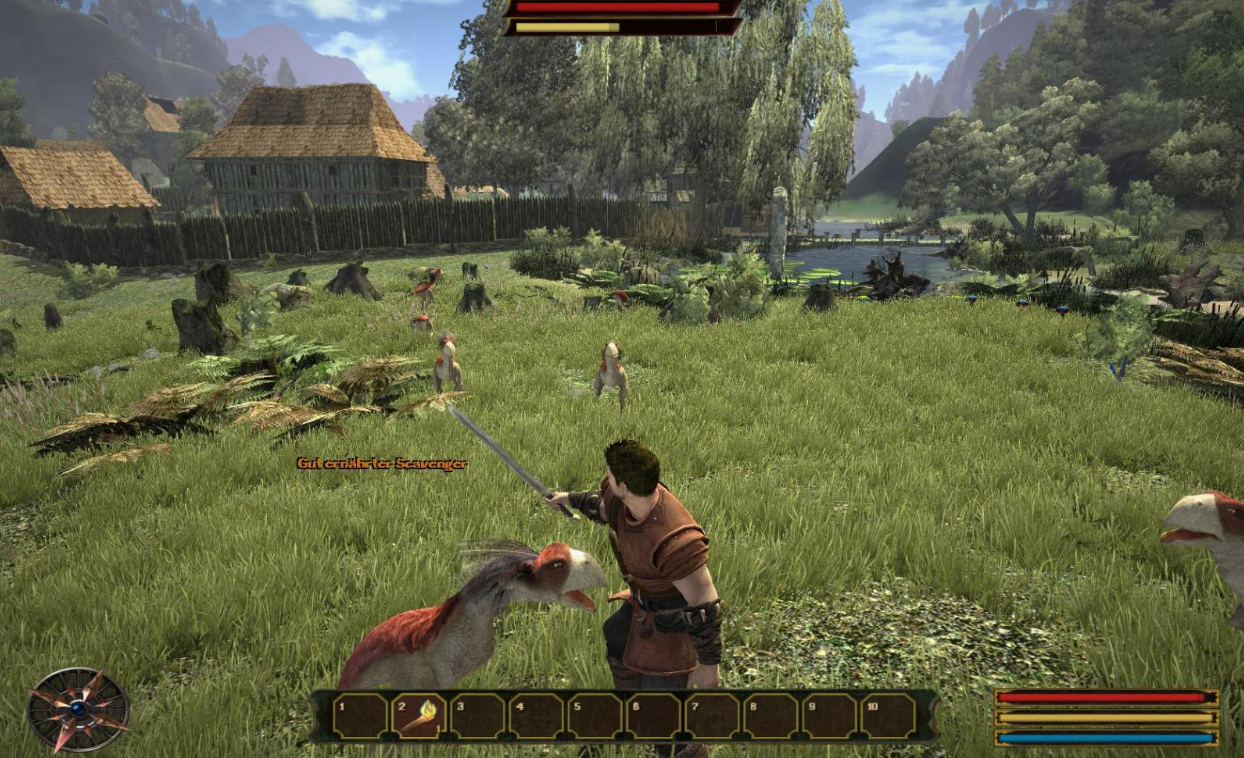
Some quests can be incredibly frustrating because of one key issue: the rendering distance. It’s quite abysmal, and this flaw is often exploited against players. For instance, I was given a mission to locate and eliminate a gang of marauders. They provided only vague hints for guidance, with no markers to help me out. I ended up wandering around for hours, even starting other quests, and encountered countless other bandits along the way, which only added to my frustration.
Feeling utterly defeated, I reluctantly turned to guides, which I usually dislike, hoping to find some clarity. I discovered this tip: “From the quest giver, head north-south, reach the crooked tree, then proceed straight, and the marauders will be ahead.” You know what would have been much simpler? Just stating they were a mere few meters over the hill from the quest giver. But due to the limited rendering distance, they remain completely hidden from view, making the quest unnecessarily complicated and tedious.
After that experience, I started to view tasks with phrases like “somewhere in the east-west” with a healthy dose of skepticism. I found myself puzzled: is it way over there in the east-west, or is it right here in the east-west? Or maybe it’s not even east-west at all, but leaning more towards the north? It’s a relief if they actually provide a clue to help guide players in the right direction.
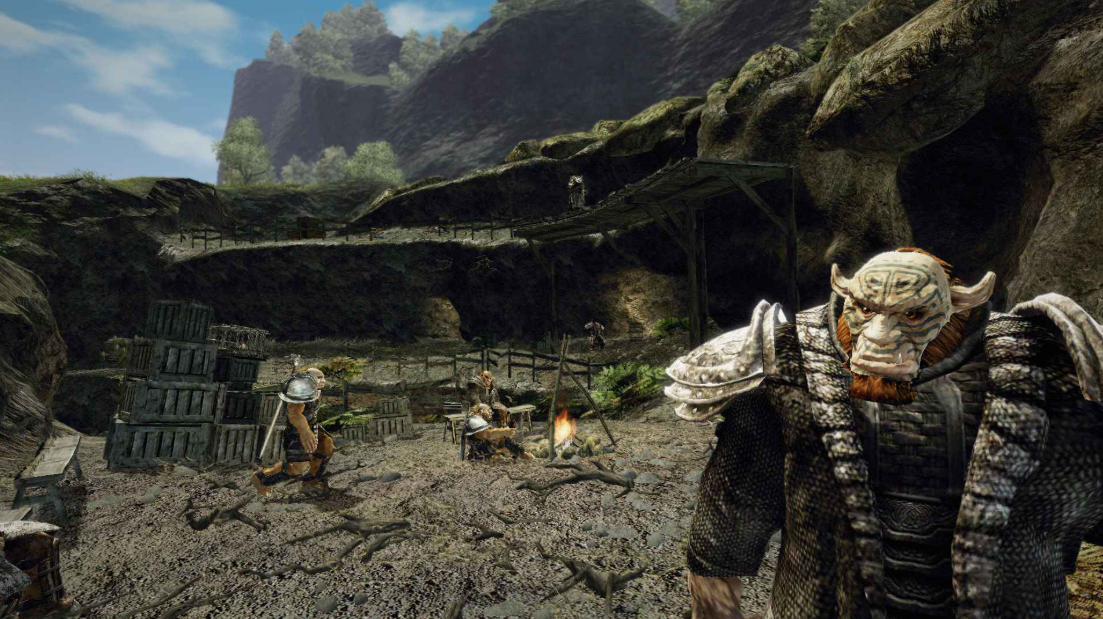
I really got annoyed with the developers who had a southern character say, “This place is in the south-north, oh child of Topographical Nonsense.” It’s quite amusing—and frustrating—when the game has glaring navigation issues but still turns around and blames the player for being lost. It feels like a cruel joke when the game mechanics don’t support the adventure at all.
Explore the world in Gothic 3 without restrictions, but with reservations
What about the exploration of the world? I wouldn’t say the game has completely missed the mark in this area, but there’s one peculiar aspect that stands out. Frequently, chests filled with items simply lie scattered along the paths. No joke. What they are doing there is a mystery, and it certainly doesn’t resemble the hidden stash of a wandering hobo.
Overall, exploration is largely encouraged and rewarded. Early in the game, discovering healing potions can be quite beneficial, and finding weapons and scrolls only adds to that excitement. Thanks to one of “Gothic’s” standout features—an unlimited inventory—the game motivates players to thoroughly explore every nook and cranny. It practically shouts, “Stuff your pockets; there’s no weight limit, and you might stumble upon something truly valuable.” One could argue that this mechanic disrupts the game’s economy, but this is a phenomenon that can be observed in many RPGs where inventory typically has a defined limit, leading to interesting gameplay dynamics.
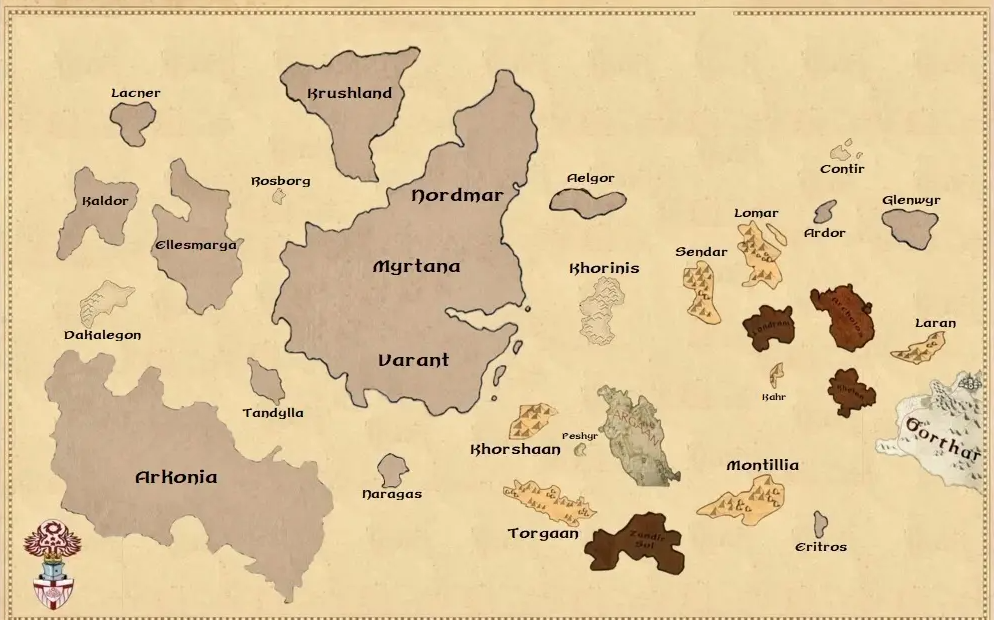
In this aspect, the third installment closely mirrors the previous ones. It could have been a truly enjoyable experience if the research didn’t clutter the open world with endless hordes of enemies, and if the combat system were functioning properly—these significant issues ultimately transform treasure hunting in the caves into a tedious chore.
As we unwind, we’re savoring a double apple hookah, taking a moment to relax after our hundredth grueling skirmish with the relentless orcs. The chaos of battle is behind us, and we’re looking forward to what adventures lie ahead.
Conclusion
The first two games offered a fun adventure, with plenty of side stories that were organically woven into the early chapters of the story. While these quests often felt optional — the player had every right to ignore them — they not only provided valuable gaming experience, but also added depth to the narrative, albeit not always complex. Yes, there were mundane tasks and missions in these games, but even they made a significant contribution to the atmosphere and the formation of a coherent world.
In the third game, I still had an emotional connection with the story, but it became much less pronounced. The narrative felt forced and lost the natural fluidity that had previously been the hallmark of the series.
It seems that the developers are truly masterful at building a personal, intimate story that gradually unfolds into an epic adventure. However, in the third part, they seem to have decided to immediately shoot for scale, thereby losing the organic development. “Gothic” seemed to have been artificially stretched: the emphasis shifted towards multiple endings and secondary quests, to the detriment of a solid combat system and a clearly constructed central narrative line.
This makes me sincerely nostalgic for the studio’s next game – in it, as far as I remember, such flaws were not observed. I look forward to how the developers will refine their formula, and I hope to once again immerse myself in the exciting story that once became the reason for my attachment to their projects.
Gothic 3 system requirements
To run Gothic 3, you will need at least 512 MB of RAM and about 4.6 GB of free space on your hard drive. The minimum configuration for the processor is an Intel Pentium 4 with a frequency of 2.4 GHz. However, for a more comfortable game with increased graphics settings and stable performance, it is recommended to use a processor no lower than the Pentium D 940. According to the parameters, you can take something better.
| Parameter | Minimum Requirements | Recommended Requirements |
|---|---|---|
| Graphics Card | 3D Hardware Accelerator Card Required – 100% DirectX 9.0c compatible 128 MB with latest drivers | 256 MB 3D Hardware Accelerator Card |
| Processor | Intel Pentium 4 2.0 GHz or AMD Athlon 64 3200+ | Intel Pentium D 3.0 GHz or AMD Athlon 64 4000+ |
| Memory | 512 MB RAM | 1 GB RAM |
| Storage | 4.6 GB free hard disk space | 4.6 GB free hard disk space |
| Operating System | Windows XP | Windows XP |
| DirectX | DirectX 9.0c | DirectX 9.0c |
How to play Gothic 3 for free on Steam via VpeSports
Sometimes you want to go back to where it all began. To a world where every step is dangerous, every choice has consequences, and you are not just a wanderer, but a part of the fate of an entire continent. Gothic 3 is a chance to set foot on the lands of the Dead Desert again, hide in the shadows of the dead Lares, or fight side by side with the rebels against the oppression of the orcs. Now with improved graphics, stable operation and the same living world that breathes and changes with you.
And you know what the best part is? No costs, no complicated settings. Everything is ready: go to our website, register – and get a Free Steam Account with the game already installed. Yes, free. No catches. Just launch – and go on an adventure.
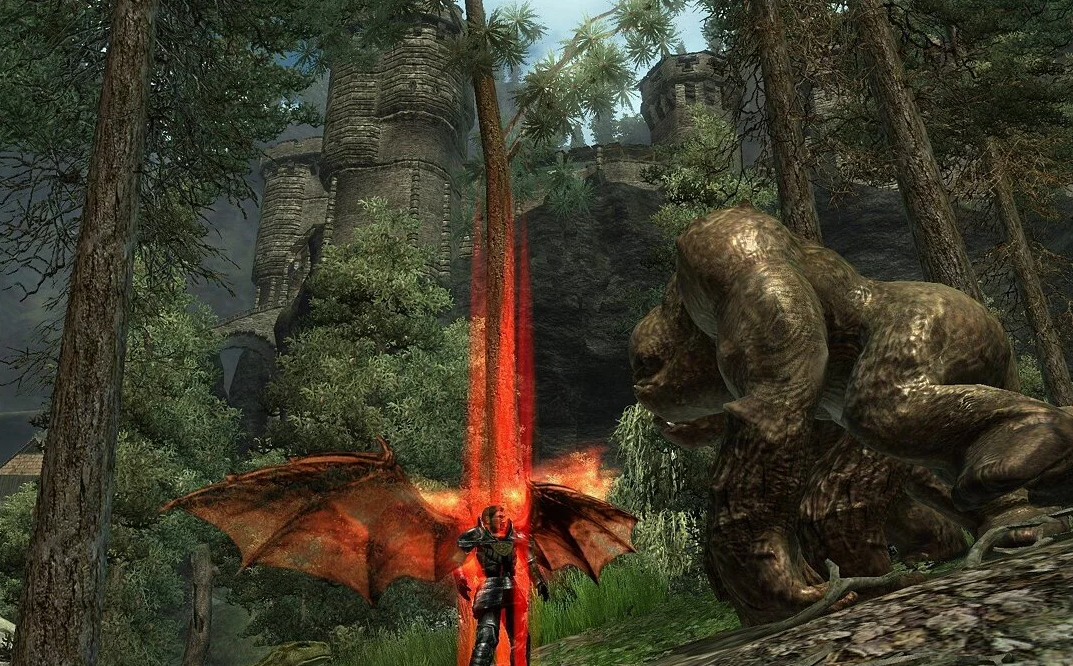
We tried to make sure you don’t waste your time: clear instructions, fast process. If you want – play right now. And when you complete the game, be sure to leave a review. We read every one and value your impressions. After moderation, we will send you the account data by email.
Do you want to always be aware of new giveaways, patches and free games? Subscribe to our Telegram channel. There are not only fresh Steam accounts, but also live communication, help, guides. Something went wrong? Don’t worry – write to us. We know how important it is to close the gestalt in time.